Cara Augustenborg
  • Home
  • The Verdant Yank
    • Cara goes to France
    • Climate Friday FAQs
  • Down To Earth
  • Media Appearances
    • Watch
    • Read
    • Listen
  • Upcoming Events
  • Gallery
  • About Cara
    • Publications

Did climate change steal my friend, Marc Cornelissen?

4/30/2015

7 Comments

 
This clearly isn’t my usual Climate Friday FAQ. Instead, this week, I’m writing a tribute to an influential friend who went missing in the Arctic yesterday and who’s had a profound influence on many of us working on the climate crisis. 
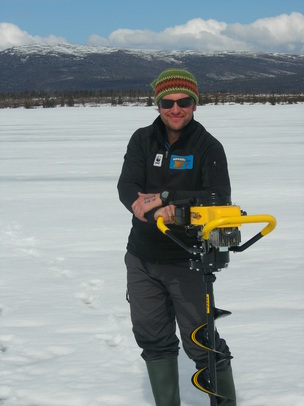
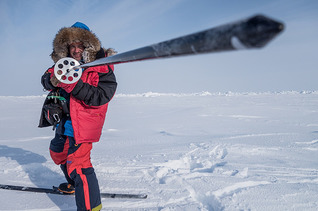
PictureMarc Cornelissen in Alaska for Ben & Jerry's Climate Change College Expedition, 2008

In 2008, I had the unique opportunity to go on an Arctic expedition sponsored by Ben & Jerry’s ice cream company to witness the effect of climate change first hand. The expedition was led by one of those brawny, intelligent Dutchmen you could imagine effortlessly summiting Everest or swimming the English channel – Polar explorer, Marc Cornelissen. As young environmentalists, my fellow adventurers and I were in awe of him with his confidence and unforgettable, cheeky smile. He told us incredible stories of his expeditions; had us in hysterics as he recounted a run in with a polar bear while he was “on the loo”; and earnestly explained that over his years of polar exploration, he was becoming increasingly concerned about the disappearance of ice in the Arctic. 


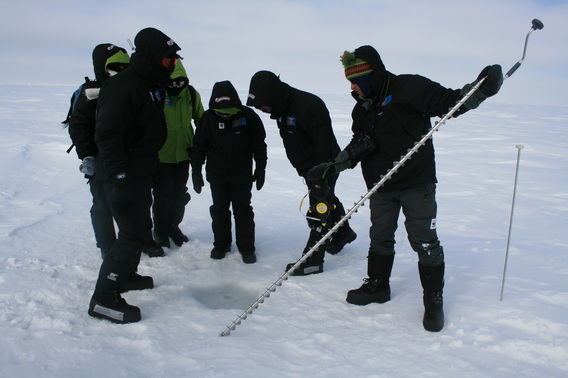
It was Marc Cornelisson who showed me what climate change really meant. He introduced me to the Inupiat people, who were struggling to maintain their cultural heritage. He gave me the opportunity to work with amazing, internationally renowned scientists like Dr. Katey Walter Antony and Dr. George Divoky, measuring methane gas erupting from frozen lakes and standing on the frozen Arctic sea witnessing how rapidly it was changing. While Marc primarily stood behind the camera documenting our reactions to what we were seeing, I still recall his boyish joy when he had the chance to dig in to the research himself – plunging his arms into frozen water, getting dirty at every opportunity. He was a tough guy, an unstoppable survivor, and someone I trusted with my life. He changed my life and the lives of many other young people who he took to the Arctic. Nearly all of us have gone on to work on the climate crisis since we had the privilege of meeting Marc Cornelisson.
Picture
Marc Cornelissen helps students measure sea ice in Arctic Alaska for Ben & Jerry's Climate Change College, 2008
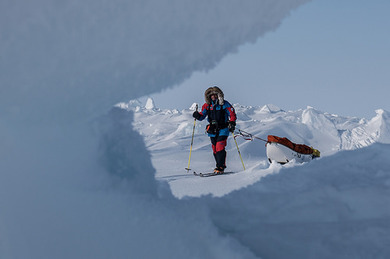
PictureCornelissen on recent expedition (coldfacts.org)
Yesterday, I heard the news that Marc and his friend, Philip de Roo, had gone missing near Resolute in the Canadian High Arctic. They had been gathering data on sea ice there since March 23rd as part of Marc’s Cold Facts initiative. They were studying the so-called "Last Ice Area", where summer sea ice cover is expected to be most resilient to warming and to remain for decades to come. The World Wide Fund for Nature (WWF) has identified this region as an area in which special stewardship should be sought due to its resilience, but a solid science base is required to do this and that was the reason for Marc and Philip’s expedition. 

Marc and Philip were surveying areas of mixed ice conditions on skis over a distance of 400 kilometers to establish sea ice thickness and snow profiles. On April 29th, their Dutch base received an emergency message from their tracer. A plane left Resolute, arriving at the latest location send out by the tracer. Their dog was spotted alive next to a sled and a big hole in the ice. Upon landing in the area, rescuers found two sleds -one on the ice, partly unpacked & the other in the open water, but still no sign of Marc or Philip. 

PictureMarc Cornelissen (coldfacts.org)
Marc’s last post on Twitter (April 28) says ‘Skiing in shorts: Tropical day in the Arctic’. In the audio stream, he jokes that he’s skiing in his underwear because the heat was so intense and “too warm, actually”. He talks about seeing unusual thin ice up ahead.  There is an eeriness listening to Marc’s account of the day – He’s his usual jovial self, finding the unusual weather quite amusing, but I can’t help wondering if climate change was to blame for my friend’s disappearance. He was an expert in polar exploration in the most resilient ice area in the Arctic. Has this area already become so thin and fragile that even someone so experienced could slip through its cracks? Is the so-called ‘Last Ice Area’ already gone?  

Marc has been engaged in the climate change issue for decades. He’s worked on both raising awareness about the problem and improving our scientific knowledge on what’s happening. As much as I try to raise awareness and stay involved in climate science, I could never be the kind of climate hero that Marc is. – I’d never be brave enough or tough enough to endure the kind of conditions Marc so willingly endures, but Marc’s attitude to the climate crisis is something I was inspired to emulate after our trip together. He saw a problem and he just got on with fixing it in his own small ways, and in those small ways, he’s managed to influence so many of us to work on solving climate change. I should have said thank you a long time ago, and I imagine there are many people thinking that same thought right now. All we can do for the moment is live our lives the way Marc inspired us to do, fixing the problem in our own small ways and continuing to fight the good fight. 
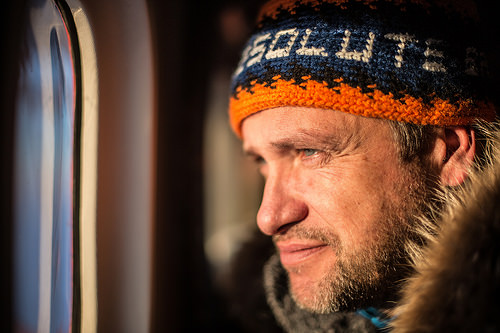
Picture
Marc Cornelissen (coldfacts.org)

7 Comments

Climate Friday FAQ 11: Why doesn’t the climate justice argument have greater impact?

4/23/2015

0 Comments

 
Picture
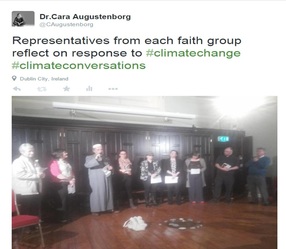
This past week, I attend two amazing talks in Dublin that focused on the moral arguments of climate action – One from Asad Rehman hosted by Friends of the Earth and the other featuring speakers from several faiths hosted by Christian Aid, Trocaire, and Climate Gathering . As a scientist, I generally avoid using moral arguments as reasons to solve climate change because I’m simply more comfortable arguing my case based on my scientific expertise with data and statistics rather than speaking on ethics and morality. However, this week, I was struck by what a compelling case the events’ speakers had that solving climate change is as much, if not more, an ethical issue than a scientific one. Unlike the scientific arguments that must accept some level of uncertainty and are defined in terms of probabilities of just when and how much the earth will warm and what the ecological impacts will be, climate justice is simply about “doing the right thing” to/for other people.


Some of the arguments that struck me in this week’s events included:
  • Natasha Harty from EcoCongregation Ireland: ‘Loving my neighbour means not emitting so much carbon dioxide that I flood their delta.”
  • Actress and Writer, Melanie Clark Pullen: “Will my daughter turn to me in 20 years’ time and angrily ask, ‘How did you think you could carry on living like you did? It’s not fair!’” 
  • Fr. Sean McDonagh, who explained that our religious models must encourage solidarity, not just with other humans, but with all creation around us.

Picturewww.mrcjf.org
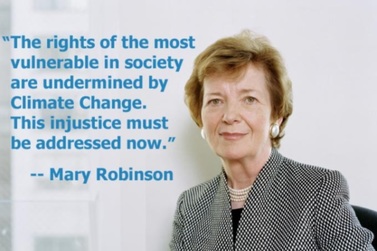
These local prophetic voices aren’t the only ones arguing for climate justice. Even former president, Mary Robinson, and Pope Francis are vocal about the need for action on climate based on moral obligation. The irony that our country’s most famous president is also the most famous global voice of climate justice, while her country was recently ranked 124th out of 151 countries for environmental sustainability and has yet to take any action toward becoming a fossil-free society or truly combating climate change is palpable. 


Given that there are so many compelling moral reasons to act on climate change and so many inspirational people pronouncing these reasons, why isn’t the climate justice argument having greater impact?


Have we ever succeeded in protecting the environment based on justice or morality? 

Picturebirdnote.org
The talks I attended this week were inspirational in part because there was such a diverse audience of concerned citizens – not just environmental activists, but people representing nearly every faith group in Ireland. With such consensus among a diverse group of people, there was a sense that climate change was not just a concern of a few “tree-huggers” but of a large part of Irish society and that the idea of justice for other humans and future generations might be the argument that is popular enough to finally induce action. 

That got me thinking about the times when society has been successful in achieving environmental victories, moments like those inspired by Rachel Carson’s ‘Silent Spring’, which resulted in a U.S. ban on DDT pesticides, or the signing of the Montreal Protocol, which protected the ozone layer by phasing out CFCs worldwide. I wondered what arguments were used to elicit such strong global agreements and protection of our environment.    

While the science of how CFCs contributed to destruction of the ozone layer was less certain than the science of climate change, the Montreal Protocol took less than 18 months to agree globally. There are lots of articles explaining the many reasons for its success and what we can learn with respect to consensus on climate change, but I couldn’t find any that mentioned a moral argument to protect future generations as a reason for agreement. Rachel Carson’s ‘Silent Spring’ appeared to have a moral argument to protect nature, but the analysis of her success indicates that prior to her book, destruction of nature had not raised much public concern and that it was Rachel’s extension of the impacts of DDT on contamination on the food chain,
cancer, and genetic damage that were ‘too frightening to ignore’. 


I polled some of my friends on this topic and none of us could think of a global environmental issue that succeeded based on a moral/justice-based argument. When we have acted unanimously on an environmental issue, is it simply because we’re trying to protect ourselves rather than out of a sense of moral obligation?

Has morality ever won a political argument?

I wondered if maybe there was no place in politics and government policy anymore for moral reasoning. Do we vote for our public representatives strictly on the basis of how much they promise to cut our taxes or make us richer? But the world, and the citizens of Ireland, have changed public policy based on moral issues in the past– Asad Rehman’s talk reminded me of Ireland’s role in ending apartheid in South Africa and in particular, the selflessness of the 11 workers in Dunnes Stores resulting in an Irish government ban on South African products. I can think of plenty of climate “bad guys” Ireland could boycott or shame if the public will existed to do so. The fracking companies might be a good place to start.   

What’s the missing link between winning the political argument on climate action and climate justice?

Picturetime.com
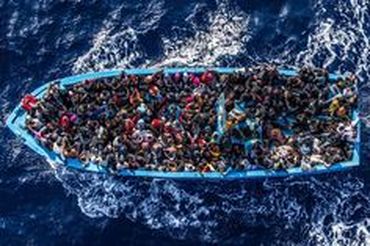
Last Sunday, 900 people drowned off the coast of Libya, bringing the total refugees who have drowned this year to 1,700. It’s estimated that as many as 200,000 refugees could arrive in Europe by the end of 2015. The 90 who survived the crossing this week were from a wide range of countries, including Mali, Eritrea, Bangladesh, Senegal, Somalia, Sierra Leone, Gambia and Ivory Coast. The press reports that these refugees were fleeing “poverty, persecution and war” in their home countries for a better life in Europe. Check the links I’ve included and you’ll see that every country these refugees came from is on the front lines of climate change and has been experiencing the impacts of a changing climate since the early noughties.

This week’s refugees are not the only recent deaths related to climate change. The Syrian civil war, which has killed more than 200,000 people in the last four years, has recently been attributed to climate change resulting in widespread drought, migration and resulting conflict. The Philippines lost nearly 10,000 people to Typhoon Haiyan in 2013, and this year thousands of people on the island of Vanuatu were left homeless and without food at the mercy of Cyclone Pam. Such events are becoming more frequent and more intense as a result of climate change.


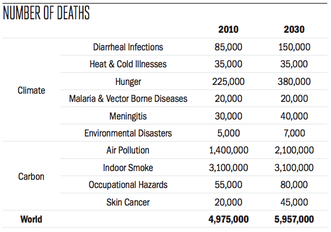
A DARA report estimated that five million deaths in 2010 were related to climate change and fossil fuels, making climate change one of the leading causes of death in the world. (For comparison, cancer causes about 7.6 million deaths per year). Eighty-three percent of the deaths due to climate-related factors happened in low-carbon-emitting developing countries — in other words, the places least responsible for climate change and the definition of climate injustice. 

Picture
grist.org
World Health Organisation reports that between 2030 and 2050, climate change is expected to cause approximately 250 000 additional deaths per year, from malnutrition, malaria, diarrhoea and heat stress, and studies suggest that climate change could expose an additional 2 billion people to dengue fever by 2080. 

There is evidence to indicate that nearly every humanitarian crisis on the globe can be linked to or is worsened by climate change, and yet we don’t see that link being clearly made in the mainstream press. I can think of a number of well-known Irish people who have been very active in fundraising for the Philippines relief effort and yet don’t think much about climate change. 
Our Taoiseach, Enda Kenny, is at the E.U. refugee crisis meeting as I write yet he is infamous for arguing that Ireland should have “special concessions
” so as not to have to reduce our greenhouse gas emissions. As compelling an argument as climate justice is, if we don’t directly relate it to recent human atrocities, it is merely just a concept and doesn’t convince anyone to take real action on climate.


Lessons learned on climate justice

Picturepixgood.com
This week, I heard the most compelling arguments for action on climate based on justice for those in other countries, for future generations, and for all species on Earth, but as 17 year old, Amy Coghlan, said at this week's Climate Conversation, 'Reading the statistic is not the same as being the statistic". So it may not be surprising that the climate justice argument that resonated with me the most was made by Asad Rehman as he described his childhood memories in London of signs outside pubs and shops that said “No Blacks or Irish”. As a boy from Pakistan growing up in London, he related to the Irish as being similarly discriminated against. He pointed out that the Irish, like the Pakistanis, had escaped poverty and hardship in their own country to find a new life in England. Like the refugees fleeing Africa this week, the Irish were once the "statistic" - fleeing Ireland for a better life elsewhere.  

I remember the Ireland that Asad described – visiting my family here as a child growing up in the United States thirty years ago, being aware of how economically and socially deprived Ireland was with its crumbling roads and cold, damp houses. It was only the lucky few in my family who didn’t have to emigrate from Ireland to find jobs, and I was a product of that immigration. Asad’s comment reminded me of that Ireland of the past, and I thought about those 900 souls who drowned this week and how our own development and prosperity has contributed to those people facing hardship the way the Irish once faced. If anyone in the world should be fighting for climate justice, it is the citizens of Ireland who still remember what poverty and forced immigration means to the people of a developing country.

Our current crop of politicians seem to have blinders on to anything that doesn’t involve job creation and immediate economic gains for Ireland, but I don’t believe our citizens are so narrow-minded. Ireland has always been an extremely generous society, giving to causes and countries who are not as privileged as we have become. It’s time we remind our politicians of that Irish spirit and force them to act swiftly and strongly to help combat climate change – Sitting on the fence or doing the bare minimum is, quite simply, immoral. 


Picture
Keep fighting the good fight!
-Cara

  • Asad Rehman's talk for Friends of the Earth Ireland is available on their YouTube channel here
  • The Prophetic Voices climate conversation hosted by Christian Aid, Trocaire, and Climate Gathering is available here

0 Comments

Climate Friday FAQ 10: How do you expand agriculture without killing the rest of us? - A question inspired by Minister Simon Coveney

4/9/2015

1 Comment

 
Picture
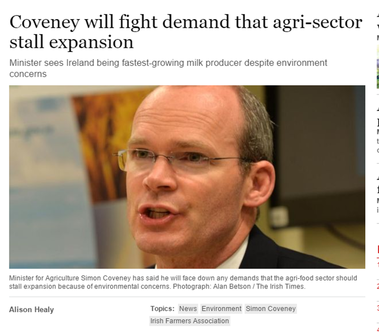
Lately, Minister for Agriculture, Simon Coveney, has come out with several statements indicating that he will ‘face down any demands that the agri-food sector should stall expansion because of environmental concerns’ and that limiting Irish agricultural expansion to meet Ireland’s climate change targets is “not acceptable”. This attitude of 'climate change and environmental degradation are someone else’s problems, not mine' is infuriating. It even contradicts his own department’s recent submission that “It is not acceptable to sacrifice the future to the needs of the present by producing food in a way that degrades our soil and water, destroys our biodiversity and exacerbates climate change.”

Ireland will face heavy fines by the EU for not meeting our emission reduction obligations
by 2020. Minister Coveney seems content to let the Irish tax payer foot that bill of between 50-300 million euro and deal with the environmental consequences of agricultural intensification as long as his own interests are protected. This week, it’s time to address Coveney’s special interests directly. 


Daring to mention the sacred cow

I’ve been criticised in previous posts for daring to question the climate change impacts around issues of cultural significance such as turf and wind, and I have no doubt this post will stir similar emotive comments from those who have vested reasons to maintain the status quo. Such comments do not suppress the urgent need to question all activities that contribute to climate change. We are at a moment in a crisis where everything we do needs to be questioned and considered with regard to its impact on climate change. No sector/industry can be exempt from examination if we’re serious about solving this problem, and the longer we wait to take action, the more dramatic the actions within each sector will have to become.

Agriculture, as the largest emitter of GHGs in Ireland (32% of total emissions last year), is one sector that requires urgent examination as to how it can help solve the problem of climate change. Lots of research has already been done to prove that Irish agriculture can cost-effectively reduce GHG emissions
, so this post will not reiterate all the options available for the sector to play its part in solving the climate problem. Instead, I want to look at Coveney’s argument to exempt agriculture from reducing GHG emissions and demonstrate why his values don’t hold up environmentally or economically.


Just how important is agriculture to our economy?

Pictureirishexaminer.ie
While it’s difficult to define just where the Irish agriculture and food industry starts and stops, agriculture is hailed as an industry that’s critical to our country’s economic growth, particularly for regions outside Dublin. Agriculture currently employs 9.2% of the country’s total employed population and provides 7.1% of Gross Value Added (GDP-eq). While agriculture was once the most important export sector to our economy, it’s now dwarfed by the industry (28%) and services (70%) sectors. Nonetheless, agriculture is touted as a significant asset in Ireland’s economic recovery based on its growth rate in recent years.

The largest share (30%) of our agri-food exports is in dairy products and ingredients, followed by beef (21%). However, family farm incomes in these areas do not necessarily reflect the global view. Average farm incomes are falling sharply in 2015 in all areas of farming. In 2014, more than 100% of cattle and sheep farm income was based on direct payment subsidies, and with the abolishment of milk quotas this month, the number of dairy farmers in Ireland is expected to continue to plummet losing a further 3,000 farmers as farms consolidate to maintain profits.

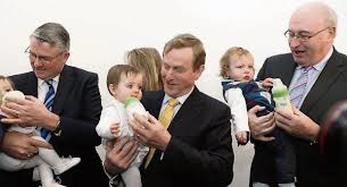
If farmers aren’t seeing the profits, where is the money from our dairy and beef exports going? Large retailers don’t have to publish details of their accounts, but the suspicion is that middle men and retailers are profiting at the expense of farmers and consumers. Even in the more profitable dairy sector, farmers say they see only a shocking 2 cents profit per litre of milk production and the end of milk quotas will further pressurise the fresh milk market. A majority of the milk produced in Ireland is owned by a handful of wholesale producers who furnish 15% of the world’s babies with infant formula (aiming for 60% in the next 5 years). Ironically, the world famously boycotted Nestle for supplying African mothers with infant formula in the 1970s, but we turn a blind eye as our own companies employ similar tactics with Chinese mothers today subsidised heavily by our government.


Where is Irish agriculture headed?

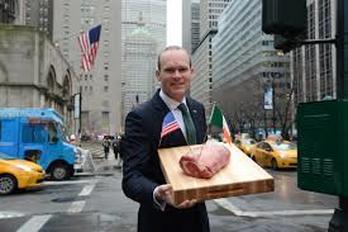
Those who argue against any kind of greenhouse (GHG) emission reductions in Irish agriculture cite its importance in our economic growth, but it’s hard to see who is actually benefiting from that growth. The Irish beef sector is on life support, completely dependent on subsidies and under further threat by the opening of EU-US trade. With the end of quotas, the dairy sector faces increased volatility and consolidation and we risk becoming a one-trick pony by putting all our milk in one freeze-dried basket of infant formula destined for China that will eventually be out-priced by countries like India as the “future dairy-force-to-be-reckoned-with”.

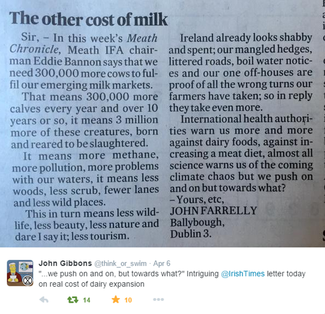
Meanwhile, Minister Coveney charges ahead with his Food Harvest 2020 ambitions for intensification of the dairy and beef sectors and tries to convince us that this can be done with only “slightly negative” or no environmental impacts. In reality, it’s hard to see how Coveney’s own prediction of an additional 300,000 cows in Ireland’s national herd by 2020 could result in anything but more greenhouse gas emissions and further degradation to water resources. Even Teagasc has recently come out stating that expansion in the dairy sector beyond 2020 will inevitably lead to an increase absolute GHG emissions from agriculture. Minister Coveney is sacrificing our reputation as a clean, green food producer for short-term, short-sighted economic gains. When he’s done, we’ll still be left with underpaid farmers and we’ll have the added dimension of a landscape ruined by the intensification of agriculture 
but at least the babies in China will be well-weaned.       


Where should Irish agriculture be headed?

PictureAgriland.ie
Agriculture isn’t just important for our economy - It’s important for our food sovereignty, particularly in the face of future climate change. Based on future climate projections, Europe will experience increasing drought conditions over the coming years. Such conditions have already taken a significant toll on food production and will continue to do so. Ireland is predicted to be at less risk of drought due to climate change. In fact, we’re likely to have much wetter winters and only mildly drier summers in the future. In the long term, this means Ireland could have to produce more food to try to help support the rest of Europe. This argument is used frequently by Irish agricultural interests as a reason to let agriculture continue to intensify production at the expense of all other social and environmental issues, but that’s only half the story.

It’s true that we should be thinking about the need to increase agricultural production to cope with future EU climatic changes. However, when you look at how we’re increasing food production in Ireland right now, it has nothing to do with European food sovereignty. We’re completely focused on supplying infant formula to China and peddling subsidised, unprofitable beef abroad. If we want to feed Europe (or even ourselves), we should be focused on producing the type of food products that are or will be needed in Europe and Ireland. Infant formula is clearly not one of those products, and beef is just not resource efficient or profitable enough to justify its continued production in Ireland.

It makes sense for Ireland to be the dairy producers of Europe. We’re good at dairy production and our climate favours it, but we need to balance an increase in dairy production with the long-term environmental impacts that this production can have. Cows produce significant environmental damage in the form of greenhouse gas emissions and damage to water quality from their wastes. A short term increase in agricultural production and profits is no good to us if we destroy our land and water in the process and have to pay fines to the EU for failing to meet environmental obligations on top of it all.     

The logical approach to increase dairy production and the number of dairy cows is to simultaneously reduce our unprofitable suckler herd for beef. There are whispers that this is the obvious answer to reducing our greenhouse gas emissions and preserving water quality while maintaining the agricultural production that we’re good at, but no one has challenged Minister Coveney on this issue. Furthermore, while a dairy cow gives us milk almost year round and at least a calf a year, a suckler cow only gives us one calf a year but still releases the same amount of methane as a dairy cow without the milk production. It terms of value for money, I’d put mine on the dairy cow over beef.    


Bottom line

If Coveney wants us to buy into his claims that agriculture will save our economy, he needs to stop promoting an unviable business in the form of beef and reduce the beef herd in line with his expansion of the dairy herd. If he wants to use food security as a justification for agricultural expansion, he needs to stop trying to wean Chinese babies off their mothers’ milk and start trying to feed Ireland and Europe instead. And if Minister Coveney wants us to believe that he gives a damn about this country, he’ll stop putting the short-term financial gains of the mighty few above the long-term well being of our landscape, our environment, our public health, and our taxes. Bottom line: Simon Coveney needs to stop pandering to big agricultural interests at the expense of the rest of Irish society.  

Picture
1 Comment

    Archives

    December 2021
    September 2019
    October 2018
    February 2018
    January 2018
    September 2017
    May 2017
    March 2017
    February 2017
    January 2017
    December 2016
    November 2016
    October 2016
    September 2016
    August 2016
    July 2016
    June 2016
    April 2016
    March 2016
    February 2016
    January 2016
    December 2015
    November 2015
    October 2015
    September 2015
    June 2015
    April 2015
    March 2015
    February 2015
    January 2015
    December 2014
    September 2014
    May 2014
    April 2014
    February 2014
    January 2014

    Categories

    All
    Elections
    Electoral_registar
    Green
    Vote

    RSS Feed

Powered by Create your own unique website with customizable templates.