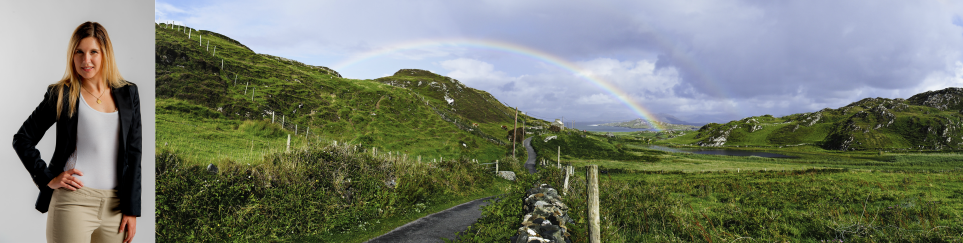
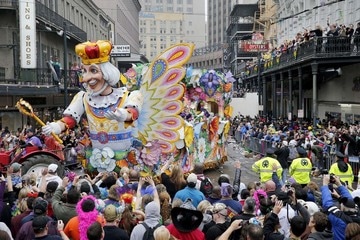
I spent ten of my formative years in The Big Easy -New Orleans, Louisiana or NOLA as we lovingly refer to it. My parents and I moved there on Mardi Gras day 1982, straight off the plane from two years in the Middle East.
|
We couldn’t have stepped into any more of a contrast from the burkas and mosques of Abu Dhabi to completely naked women walking down Bourbon Street. You can only imagine what I thought as the taxi forced its way through crowds of parade goers to our hotel -something close to “WTF kind of crazy place have my parents brought me to?!”
|
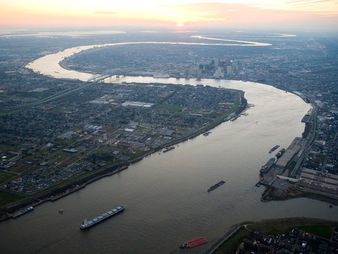
New Orleans is unique in every aspect, both culturally and geographically. For example, when you live in New Orleans, you get used to walking up, not down, to the water. New Orleans is a city that shouldn’t exist. The mighty Mississippi River winds its way above the land with earthen and concrete levees to protect us from drowning in it.
|
This feat of engineering sustained a city of up to 400,000 people for over 70 years, but they have to bury their dead in ornate sarcophagi because the ground is too spongy and flood prone to keep them below ground. Growing up below the sea gives one a unique perspective and is perhaps the reason why walking down to the sea from my home in Ireland still seems like a novelty for this Southern Belle.
|
|
In the decade my family and I lived in NOLA, we fell head over heels in love with the city. It was easy to see why many people from New Orleans never even cross the Mississippi River, let alone leave the state. Why would you go anywhere else when you live in what’s regarded as the “most unique” city in America? The food, the music, the history, traditions and people were out of this world in all respects, and I feel privileged to have been infused with their “laissez les bon temps rouler” spirit. However, the New Orleans of my youth wasn’t paradise. -It was gritty, poor, dangerous, unofficially segregated and downright racist in places. In 1992, my parents felt we needed to move west for a safer life that allowed teenage Cara a lot more freedom (and them a lot less worry).
|
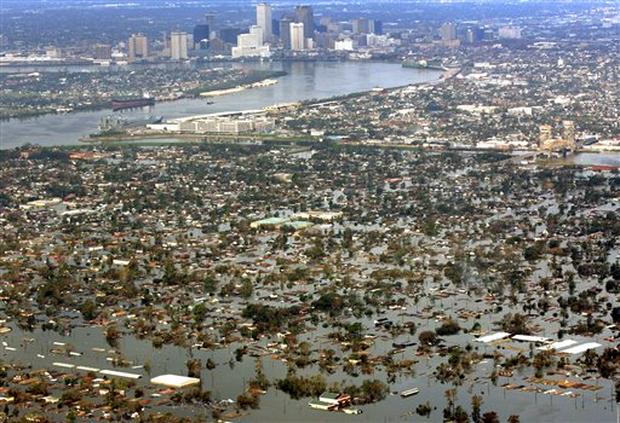
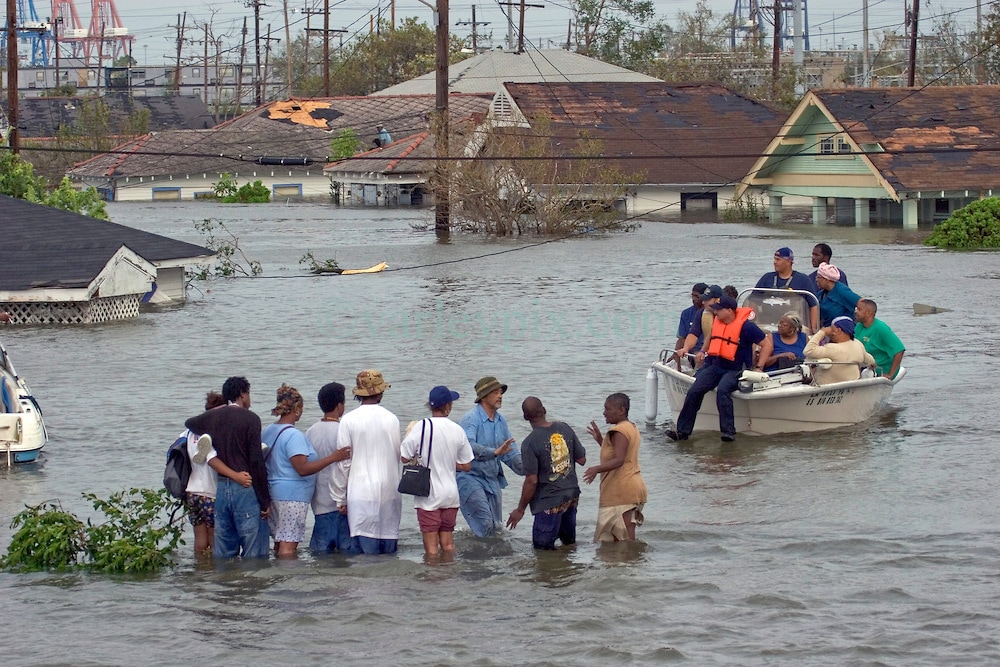
Hurricane Katrina hit the city 13 years later in 2005. It is ranked as the third most intense tropical cyclone to make landfall in the USA and the deadliest since 1928, taking at least 1,465 lives. It flooded 80% of the city of New Orleans, mostly due to a storm surge and levee failures that could have been prevented through better engineering. Hurricane Katrina was the costliest natural disaster in the history of the United States and it’s considered the world’s worst engineering disaster since Chernobyl.
|
My parents and I watched on the television as our former city fell apart and was utterly ignored by the political elite in Washington D.C. Old friends drowned in their attics and our hearts were broken. In response, my father returned to New Orleans to help bring power back to the city, sleeping on a cruise ship docked along the Mississippi River for three months while working for the U.S. Department of Energy.
Climate change wasn’t high on my radar when Katrina hit New Orleans. I still naively thought dwindling freshwater resources would be the biggest environmental problem of my generation and that climate change was a longer-term challenge with less urgency. I can’t even say I made the connection between Katrina and climate change when it happened because hurricanes had always been a part of my life. My elementary school teachers in New Orleans recounted terrifying stories of Hurricanes Betsy, which killed 81 people in 1965, and we prepared to evacuate during hurricane season every year just in case another big one hit. Hurricanes, flooding, termites, fire ants, stinging caterpillars and humidity were the sacrifices we made for the privilege of living in New Orleans.
It wasn’t until 2007 that I started to connect the dots on how climate change might destroy everything I love, including the city that raised me. That’s when Al Gore eloquently explained the link between our warming ocean and more violent storms in his movie, ‘An Inconvenient Truth’, and that’s when I realized the culture and history I grew up with might one day be lost beneath the sea forever.
Last week, I returned to the Crescent City for a family gathering. It was my first time back since Katrina. As I entered the USA via New Jersey, I was surprised how much had changed state-side since I left 14 years ago. Restaurant staff in Newark airport have been replaced with ipads so you scan your credit card and place your order via computer and only come into contact with a person when they silently place your meal in front of you. -Some how they still managed to lose my order... Everyone in the airport was on their phones and disconnected from what was going on around them. America seemed a lot more high-tech but less friendly than when I lived there.
I expected to see big changes in New Orleans too. I mean, the internet hadn’t even been invented when I grew up there so the city had plenty of scope for modernization since my day. Instead, I found a city that seemed to be stuck in a time warp. The poverty rate of 30% has remained the same as it was in 2000 and the murder rate remains the highest in the United States. Aside from the tourist spots, the parts of the city I visited looked poorer than ever.
|
The impacts of Katrina fell disproportionately on the black community, who now comprise a smaller percentage of the population and are less represented in government. Nearly 100,000 black people and 11,000 white people never returned to the city after Katrina. In the lower 9th ward, 40% of the mostly black population never returned, in most cases because they couldn’t afford to. Of those who did return to New Orleans, the median income of black households is a staggering 54% lower than of white households.
|
In spite of the inequality and poverty, New Orleans is still wonderful. I savoured as many of my favourite childhood foods as I could from beignets to crawfish and gumbo; I marvelled at the jazz musicians on street corners and clubs of Frenchman St., so talented I couldn’t comprehend why they weren’t playing in giant sold out concert halls; and I had fascinating conversations with taxi drivers and waiters about their lives. Even more than a decade later, everyone wanted to tell me where they were when Katrina hit and how they survived in the months afterwards under truly primitive conditions.
|
Tourism is nearly back to pre-Katrina levels and it’s easy to see why. -There is simply no place and no people in the world that can do it like they do it in New Orleans. However, as I flew out of New Orleans International Airport to return home, I could see just how close the sea was to consuming the city.
|
|
Under “normal” conditions over its 300 year history, most of New Orleans is about half a meter to 2 meters below sea level but the Northwest Gulf of Mexico is now experiencing some of the largest rates of relative sea level rise in the USA and New Orleans is projected to have one of the highest increases in sea level among 138 coastal cities on the planet.
The existing levees rise 2m above sea level in the most populated parts of the city, but not all parts of the city are as protected and subsidence is causing those levees to sink by nearly half a meter per decade in some places. The land being swallowed by the Gulf waters also houses half of America’s oil refineries, along with pipelines that serve 90 percent of the nation’s offshore energy production and 30 percent of its oil and gas supply, giving us another good reason to divest from fossil fuels before they too are underwater. A 2015 study indicates New Orleans is locked in to drowning by the end of the century based on our actions to date. Already, a football field worth of land is being lost to the sea every hour in Louisiana.
|
All of us will lose things we love to climate change eventually but how surreal to live at a time when that includes losing the entire city you grew up in. New Orleans is a city which can both least afford to be further below the sea and least deserves any further tragedy, yet it will be most impacted by climate change and its resulting sea level rise. In Louis Armstrong’s famous words, I think I finally know what it means to miss New Orleans because now I understand that it won’t always be there to return to.
|
|

|
Thanks to the people of NOLA for being amazing, kind and resilient and making my trip “home” magical and memorable. Keep fighting the good fight.
-Cara |
 RSS Feed
